A viral video says a cancer treatment is being kept secret because nobody can patent it. We went and found the doctor's patients — every one we could name. Then we counted.
THE VIDEO
There's a TikTok going around — 76,000 plays and climbing — from @conspiracy_peterx, "Daily Conspiracy PeterX." His whole channel is "what's hidden from you" videos, and this one is called "What If Baking Soda Is Hiding a Medical Secret Nobody Wants to Fund?"
His claim, stated fairly: tumors turn acidic, that acid fights cancer treatment, and if doctors used baking soda alongside treatment the way they should, treatment would work better and people would need less of it. He says a doctor who injected baking soda straight into tumors was shut down for it — because there's no money in a remedy nobody can patent.
We don't take his word for it. We don't take the establishment's word for it either. We counted. Here is the paperwork, in both directions.
WHERE HE'S RIGHT
Give the man his due first, because part of this video is built on real science.
Tumor acidity is real. Tumors pump out acid, that acid blunts chemotherapy drugs and hobbles the immune cells that are supposed to attack the cancer. In 2009, researchers at Moffitt Cancer Center (Robey, Gillies and colleagues) gave bicarbonate to mice with breast cancer: it raised tumor pH and cut the spread of the cancer — the metastases. It did not shrink the original tumors, and the video doesn't tell you that part, but the finding was real. In 2015–16, Dr. Shari Pilon-Thomas's team showed bicarbonate made immunotherapy work better in mice. A small 2016 human trial in China (Chao and colleagues) added bicarbonate to targeted liver-cancer treatment and tumors responded better — though follow-up analysis found no overall survival advantage. Bicarbonate is already standard protocol in one corner of oncology: it protects patients' kidneys during high-dose methotrexate. And a 2018 study in the Journal of Immunology found drinking bicarbonate solution nudged the immune system toward an anti-inflammatory setting — small and preliminary, but published and real.
And his economics are right. A remedy nobody can patent is a financial orphan. No company spends hundreds of millions on the giant trials that turn a promising idea into standard care, because there's nothing to own at the end. Ideas like this one don't get disproven — they get left untested. That part of the video isn't conspiracy. That's just how the money works.
THE DOCTOR
The video never names its doctor. We will. His name was Tullio Simoncini, an Italian oncologist, born 1951, died May 20, 2024.
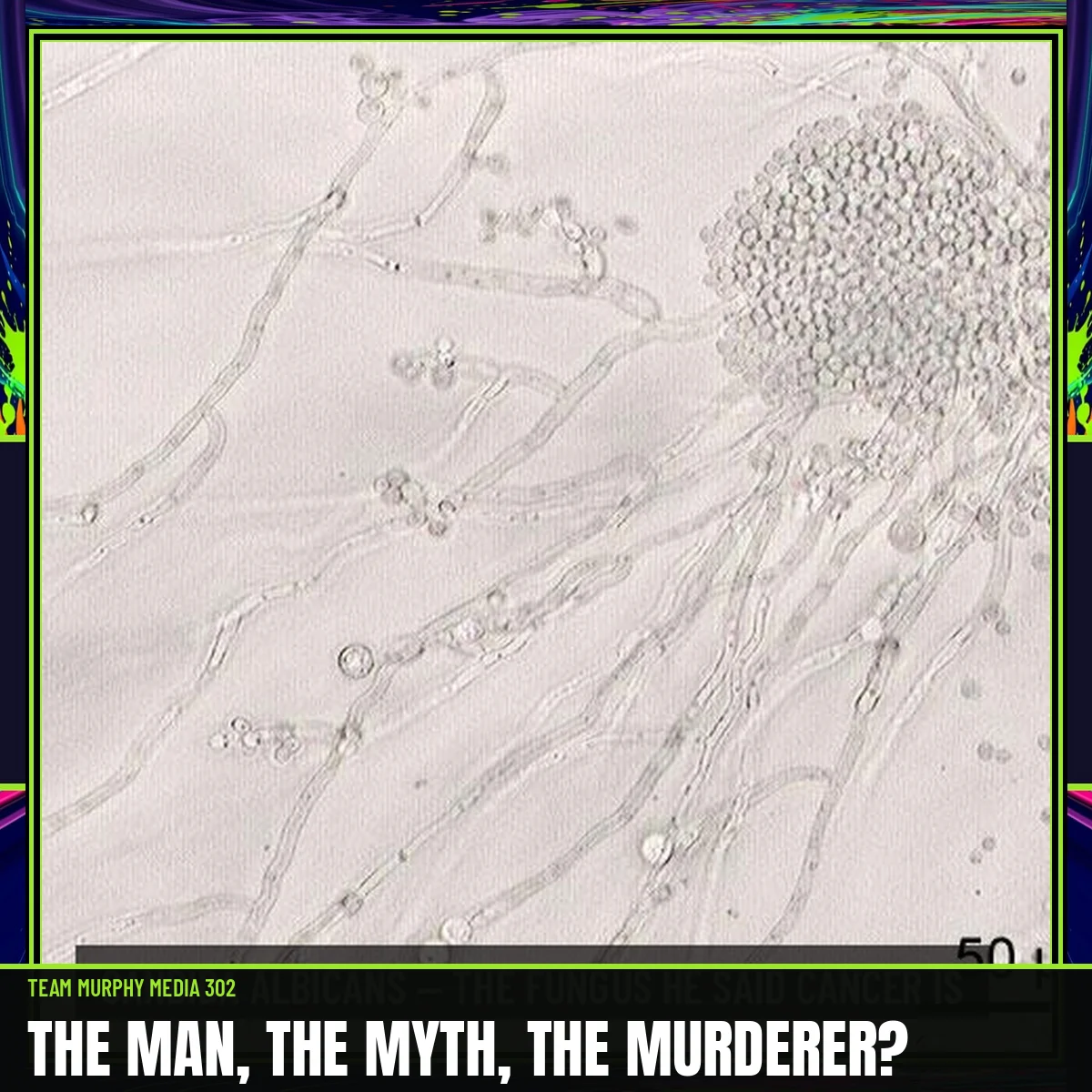
And here is where the video starts bending. Simoncini was not the "alongside treatment" man. His claim was bigger and stranger: he said cancer IS a fungus — Candida albicans, the yeast in the microscope photo in this post — and that washing tumors in baking soda killed the fungus and cured the cancer. He didn't add bicarbonate to treatment. He replaced treatment with it, and told patients the real medicine was the fraud.
THE RECORD
2003: struck off the Italian medical register.
2006: convicted of fraud and manslaughter. Massimo Civetta, 34, terminal intestinal cancer, died when a bicarbonate infusion perforated his bowel.
He kept treating anyway, moving abroad. October 8, 2007: Sylvia Trachsler, 58, died in Amsterdam after daily bicarbonate infusions at the Berg en Bosch clinic in Bilthoven, the Netherlands. The Dutch Health Inspectorate banned the treatment after her death.
October 2012, Tirana, Albania: Luca Olivotto, 27, a brain-tumor patient, died of metabolic alkalosis. Read that again — not the cancer. The baking soda. Too much bicarbonate pushed his blood chemistry past what a human body survives. In January 2018 Simoncini was convicted again: five years, six months.
The price of the miracle: about €7,750 per treatment course, plus roughly €3,700 in clinic fees. He claimed he had treated "hundreds" of patients and claimed cure rates around 90% for early-stage cases. What he published, in twenty years, was nothing. No patient registry. No case series. Not one paper in any scientific database. Ever.
THE COUNT
So we did the thing nobody in this fight seems to do. We found his patients — every named one in his promotional books, his website's testimonials, the court records and the press — and we checked who is still here.
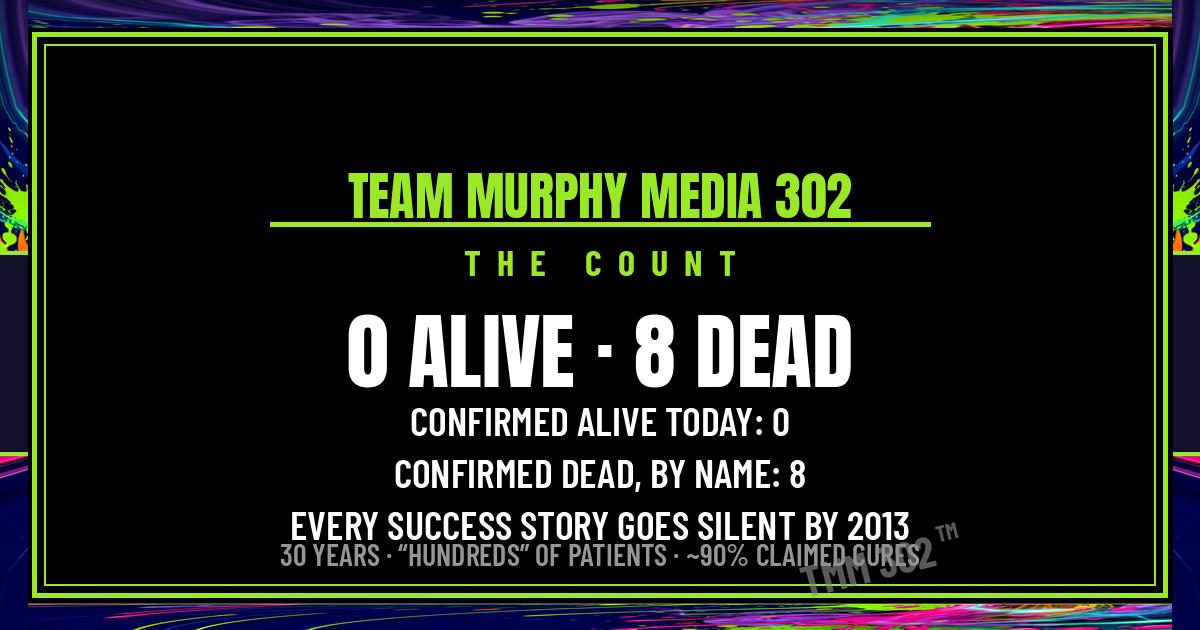
CONFIRMED ALIVE TODAY: ZERO.
Rod Peterson, a Canadian treated in Rome in 2009 for kidney cancer that had spread to his lungs, is the strongest success story there is — his testimonial says follow-up scans showed the lung tumors gone. His last trace anywhere is that testimonial, recorded around 2010 and re-uploaded in 2013. Nothing since. A woman called Loredana, breast tumor, 2010, is listed as cancer-free a year later — after a surgeon cut the tumor out first; the bicarbonate was washes after the operation. The rest of the "successes" are initials only — F.F., F.L., B.B. — people who cannot be traced by design. F.L. also had surgery and four cycles of chemo.
CONFIRMED DEAD: EIGHT, BY NAME. PLUS ONE WITH NO NAME.
Massimo Civetta, died ~2003, bowel perforated by an infusion. Sylvia Trachsler, 2007. Marjolein Bouwman, 25, ovarian cancer — Simoncini declared her "completely cured," she became a public promoter of his method, and then she learned the cancer had spread everywhere; she died November 2, 2008. A young woman called Aysha, dead October 2008, after being banned from Simoncini's own forum for questioning the treatment while she deteriorated. Robert Fyvie, 54 — his family and friends raised €10,000 to send him to Rome; he was dead in five months, August 2010. Brian Haw, the famous Parliament Square peace protester, died June 2011 in Berlin under Simoncini-method treatment. Luca Olivotto, 2012, killed by the treatment itself. And "Pamela," who posted a video testimonial in 2012 declaring herself cured — Italian television spotted her in 2016, visibly consumed by the disease, and she died the following year. Her "cured" video is still online today, still being shared as proof. The ninth: an unnamed American whose family paid about €28,000; during treatment he suffered a massive brain hemorrhage, was declared brain dead, and life support was withdrawn.
THE FAIR QUESTION
Now the part the debunkers skip. We're not skipping it, because it's true.
Doctors who follow protocol lose patients to the treatment itself, every day. Chemotherapy causes strokes, blood clots, heart failure, and fatal infections when it wipes out a patient's immune system. A Public Health England study put 30-day mortality after chemotherapy at about 2.4% for breast cancer patients and 8.4% for lung — and some of those deaths are the drugs, not the disease. Nobody prosecutes those doctors. It's written down as "complications."
"Standard of care" is a legal shield. If a university hospital tests a bold idea and a patient dies, that's an "adverse event" in a journal and the research continues. If an outsider does it, it's a criminal case. The system's tolerance for risk is reserved for insiders, and the system's patience for unpatentable ideas is zero. That asymmetry is real, and anyone who won't say it out loud is selling something.
WHY HIS CASE STILL FALLS
Three receipts.
One: consent. A chemo patient signs forms that say, in writing, this treatment can kill you — for a therapy whose benefits have been measured. Simoncini's patients consented to a story that was false: your cancer is a fungus, this cures it. Some of them gave up treatments that could have saved them because of that story. That is why the word fraud sits in his convictions next to manslaughter.
Two: Luca Olivotto didn't lose a fight with cancer. The treatment poisoned him. There is a difference between a patient a therapy couldn't save and a patient the therapy killed.
Three — and this is the deciding one: after 2006, after a court had already told him his treatment killed a man, he kept going for another decade. Trachsler, 2007. Bouwman, 2008. Olivotto, 2012. A believer stops when it kills. A man running a business books the next patient.
THE "BURIED RESEARCH" QUESTION
The video never says his research was buried. That question came from us — it's the question everybody asks next — so we ran it down the same way. Start here: for research to be buried, it has to exist. His book, his website and his lectures circulated freely for twenty years — the website ran out of the Netherlands, his videos never came down, and you just watched a 76,000-play TikTok about him. His claims were never silenced. What never existed, in any form anyone could check, was the research itself: no study, no dataset, no case series. At two criminal trials, documented cures would have been his defense. None were produced.
One honest concession, because the receipts cut both ways: his early work was the 1990s, on paper, in his own office — and police seizing a clinic's files in a fraud investigation is standard procedure. Some paper may genuinely be gone, and "we can't find it" is not the same sentence as "it never existed." But paper doesn't explain 2005 through 2020: the silence on his own website, in his own trials, and among his own patients, who hold their own scans. The excuse covers one filing cabinet. It doesn't cover thirty years.
THE CLAIMS LEDGER — THIS VIDEO'S SCORECARD
WHAT'S TRUE
• Tumor acidity is real, and it fights treatment.
• Cheap, unpatentable remedies don't get research money. The system funds what it can patent, and financial orphans stay untested.
WHAT'S UNPROVEN — DECIDE FOR YOURSELF
• Bicarbonate alongside chemo or immunotherapy could make treatment work better and cut how much treatment a person needs. The mechanism is real, the mouse data is real, one small human trial showed better tumor response and no survival advantage on follow-up. At human scale the big test has never been run — partly because nobody can patent the answer. His strongest claim is also his least proven one.
WHAT'S NOT
• Baking soda cures cancer by itself. There is no verified case — and the man who claimed it loudest left zero confirmed survivors.
• Cancer is a fungus. Pathologists examine tumors every day. Tumors are human cells gone wrong, not colonies of Candida.
• The doctor was shut down because it worked. The shutdowns followed dead patients, in two countries, across fifteen years.
• Baking soda is harmless because it's just baking soda. Metabolic alkalosis killed Luca Olivotto, and home baking-soda regimens send people to emergency rooms.
BRING IT UP WITH YOUR DOCTOR
Don't self-treat on a video's say-so — his or ours. Bring questions instead. These ones:
• Is bicarbonate already part of my protocol? If you're on high-dose methotrexate, it very likely is — it's how they protect your kidneys.
• Are there clinical trials on tumor pH, or bicarbonate alongside treatment, that I could join?
• What happens if I take baking soda on my own? Ask about alkalosis, about the sodium load, and about your other medications.
• If an idea sounds promising, how would we test whether it's working on MY scans — and when would we look?
That's how an idea gets an honest trial: on your scans, with your doctor, with your eyes open.
THE BOTTOM LINE
We audited this one video — not his whole channel — claim by claim. Some of what he put out is real: the acidity science, and the money problem, and we credited both. Most of this video is bullshit: the fungus, the heroic doctor, the miracle cure. And unlike the video, and unlike the fact-checkers, we brought the paperwork for both directions.
The man: Tullio Simoncini, 1951–2024. The myth: the miracle cure. The murderer? The law said manslaughter — twice — and fraud. The ledger says the rest: thirty years, "hundreds" of patients, ~90% claimed cures. Zero confirmed alive. Eight confirmed dead, by name.
We just counted. Decide for yourself.
RECEIPTS: Italian court records as reported by ANSA and AdnKronos (convictions, 2006 and January 2018); Dutch Health Inspectorate (IGZ) statement, February 2008; Psiram and Quackwatch case archives; Medbunker investigation, 2019; Mark Sloan, "Sodium Bicarbonate vs. Cancer" (the testimonials' own source); guarire.net testimonial archive; Robey et al., Cancer Research, 2009; Pilon-Thomas et al., Cancer Research, 2016; Chao et al., eLife, 2016, and follow-up analyses; Journal of Immunology, 2018; Wallington et al., The Lancet Oncology, 2016 (Public Health England 30-day mortality data).
Photo: Candida albicans under the microscope — the yeast Tullio Simoncini claimed cancer is. Micrograph by Y. Tambe, via Wikimedia Commons (CC BY-SA 3.0). Cards: Team Murphy Media 302.