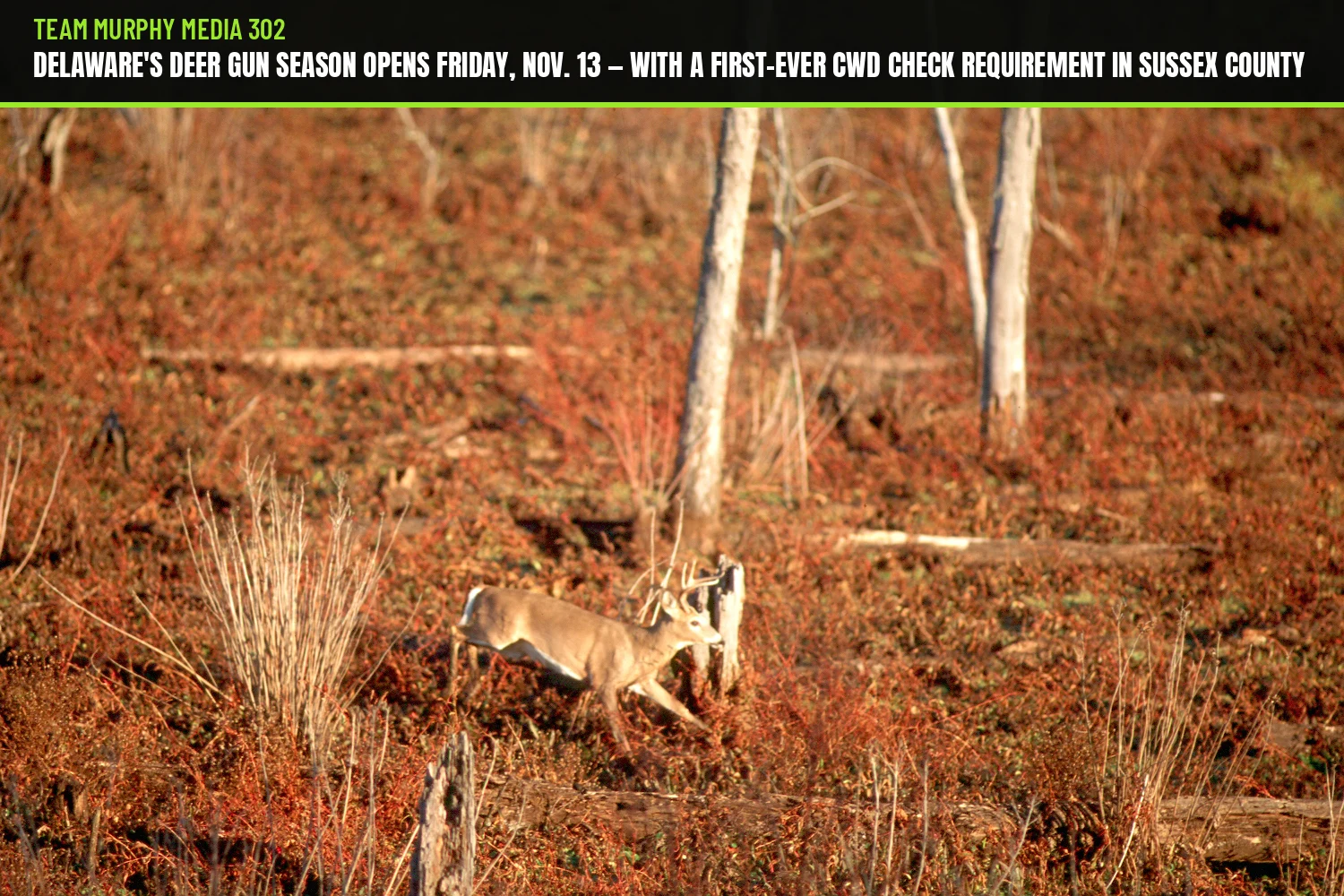
Delaware's November general firearms deer hunting season opens Friday, Nov. 13, 2026, and runs through Sunday, Nov. 22, the Delaware Department of Natural Resources and Environmental Control (DNREC) announced. The 10-day season is Delaware's most popular deer season — DNREC says it typically accounts for about 40% of the state's total deer harvest, within a statewide deer season that spans five months, from Sept. 1 through Jan. 31.
New this year: mandatory CWD check stations
Chronic wasting disease (CWD) has been detected in Delaware for the first time. In response, DNREC has established a Chronic Wasting Disease Management Zone for the 2026-27 season covering Wildlife Management Zones 11, 14 and 16, all in Sussex County.
Anyone who harvests a deer in that zone during the November general firearms season must check it with DNREC Division of Fish and Wildlife staff at one of three Sussex County locations:
• Delaware Solid Waste Authority's Jones Crossroad Landfill, 28560 Landfill Lane, Georgetown
• Gumboro Community Center, 36849 Millsboro Highway, Millsboro — DNREC notes the community center replaces another Gumboro check station announced earlier this year
• Redden State Forest's Jester Tract parking lot, Redden Road, Georgetown area
Check stations will be open every day of the season from 8 a.m. to 9 p.m. DNREC says this will be the only time of year hunters are required to bring harvested deer to DNREC biologists for sampling.
"Since the deer harvest rate is high during the general firearm season, it gives us an opportunity to efficiently collect a lot of CWD samples within a relatively short period of time," said Joe Rogerson, DNREC Wildlife Section Administrator. DNREC says it will use the sampling data to assess CWD distribution in the state and to help guide management for the 2027-28 season and beyond.
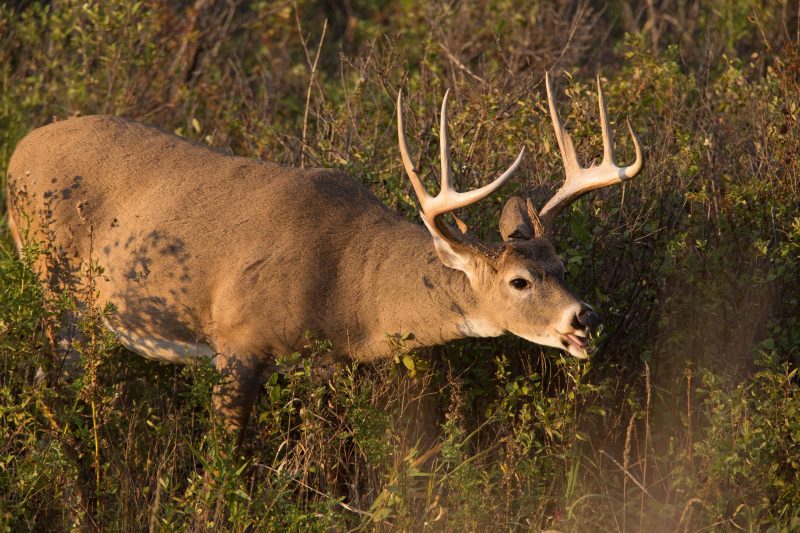
Registration and the new QR code
Hunters are reminded to have their deer registration — including the newly implemented QR code, presented electronically or as a printed copy — readily available at check-in, so staff can quickly pull up registration information and reduce wait times. Hunters can still have a deer sampled if they do not have the QR code. Under Delaware regulation, every harvested deer must be registered within 24 hours.
Delaware Online reports three cases of CWD have been confirmed in southern Delaware white-tailed deer this year, making Delaware the 37th state affected by the fatal neurological disease, which affects deer, elk, moose and other members of the deer family. There is no scientific evidence the disease can infect humans, according to DNREC, but eating meat from animals with CWD is not recommended.
Testing outside the zone, and moving deer
Hunters outside the management zone who want a deer tested can place the deer head in a designated chest freezer at any Delaware Hunters Against Hunger location, where instructions are posted. DNREC staff will also be present at three deer processors during the season — Dutch Neck Deer Processing in Middletown, Miller's Butcher Shop in Camden, and Johnson's Deer Cutting in Milton — asking hunters to voluntarily donate the head of their deer for sampling, or to take a voluntary sample kit to their taxidermist for trophy mounts.
Any deer harvested within the management zone and moved to other parts of the state must go to a taxidermist or deer processor, or be disposed of after processing in an extra-thick plastic bag at a landfill or with normal household trash.
More on CWD and the state's response plan, including test results, is at de.gov/cwd.
For non-hunters: ten days of shared woods
Drivers should use extra caution at dawn and dusk through Nov. 22, when deer movement and hunter activity peak — and remember that deer travel in groups, so one crossing deer usually means more are coming. Hikers, trail users and dog walkers sharing the woods during the season should wear bright colors or hunter orange, stay on marked trails and keep dogs close.
News tip: see something, know something? Message the Team Murphy Media 302 Facebook page or email [email protected].