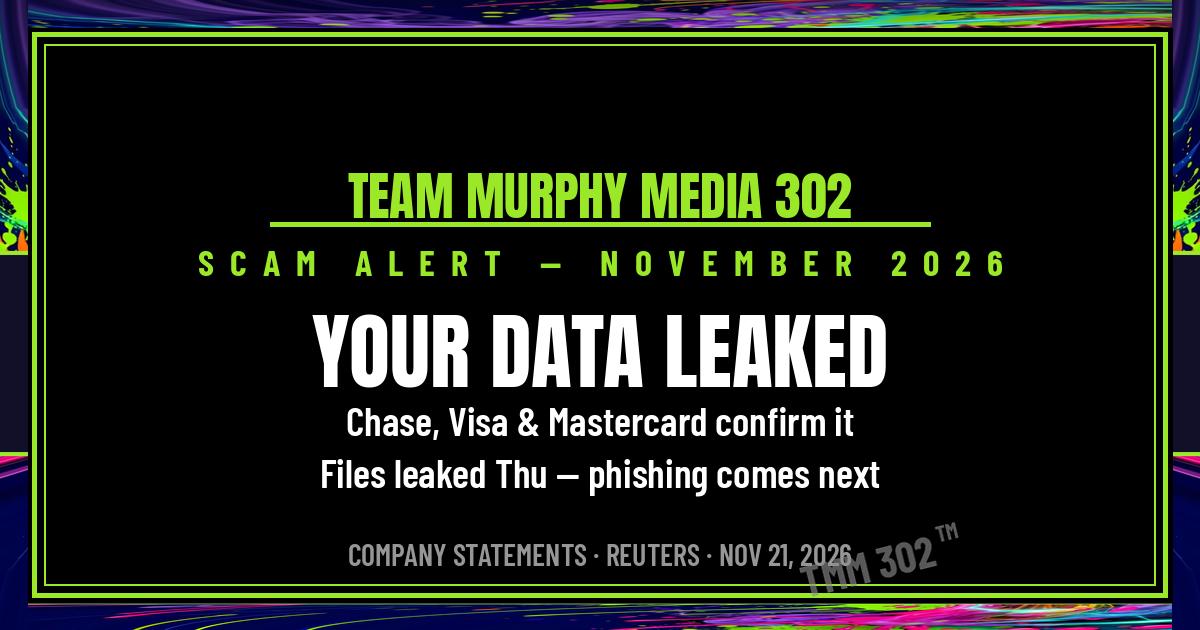
Three of the biggest names in banking and cards have confirmed the same story this week: crooks got into outside companies that do work for them, walked off with customer files, and dumped them on the dark web when the ransom didn't get paid.
Here's what happened. A ransomware and extortion crew that calls itself n0n — a group that surfaced in September and makes its money stealing company data and threatening to publish it — listed JPMorgan Chase, Visa and Mastercard on its leak site Monday, November 16, with a 48-hour deadline. When the deadline passed, the files went public on Thursday, November 19.
All three companies say the same thing about how it happened: the break-in was at third-party service providers — outside vendors — not inside the companies' own systems. None of the three has named the vendor.
COMPANY BY COMPANY
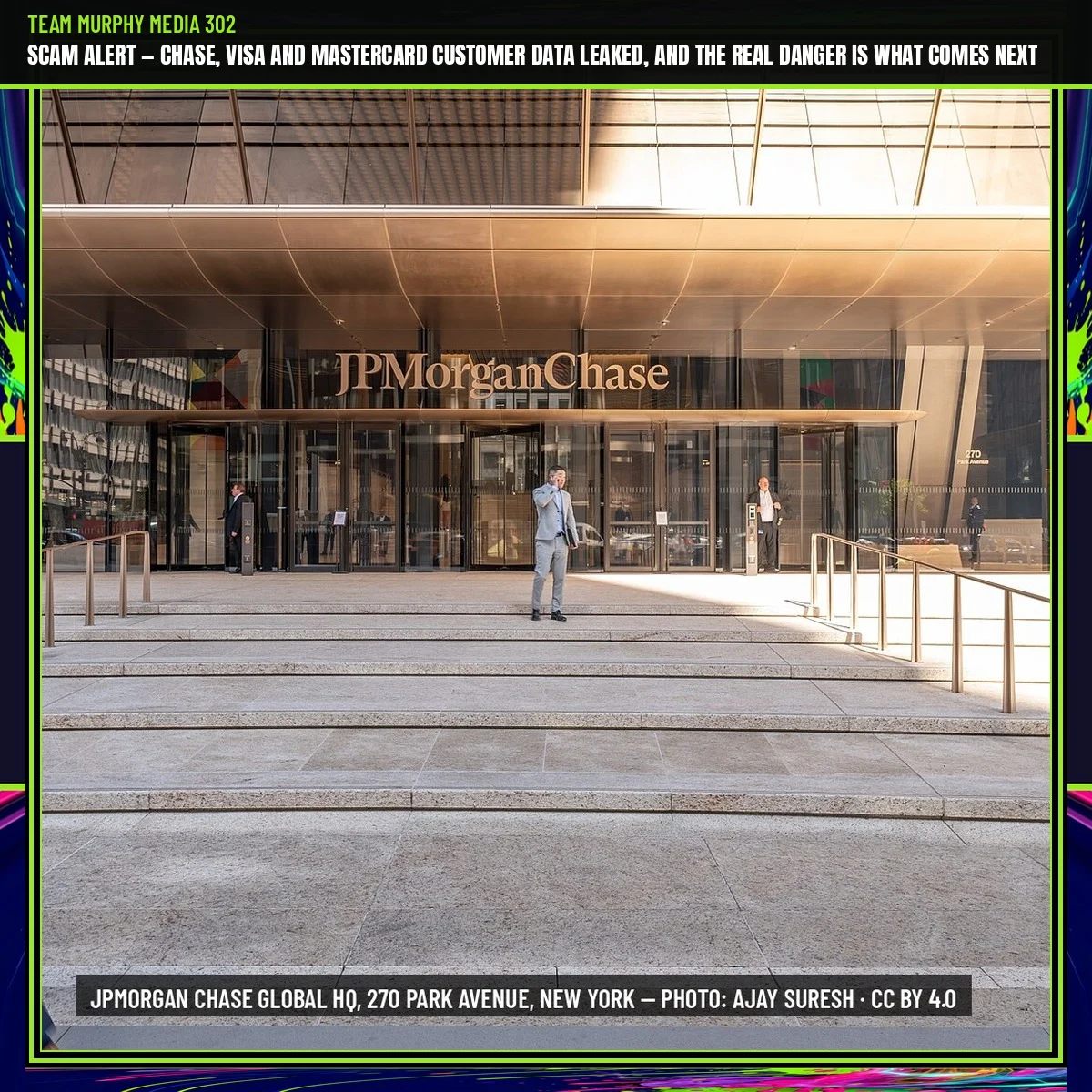
JPMorgan Chase said Thursday that attackers got into marketing data held by its vendors — customer names and email addresses. Reporters at Reuters who went through the leaked files found more: over 16,000 customer email addresses, some with phone numbers and postal codes, plus what appear to be 124 email addresses belonging to bank employees. The records appear to come from Chase's invitation-only Reserve card program — the bank's ultra-wealthy client tier. Chase says it will contact affected customers directly and offer complimentary credit monitoring.
Visa says its incident sits with a service provider in the Asia-Pacific region. The files hold thousands of customer email addresses, phone numbers and marketing campaign records, mostly tied to Asia-Pacific markets — Australia, Hong Kong, Japan, Singapore and South Korea, per Reuters. Visa's own systems were not involved.

Mastercard confirmed Friday that a vendor for one specific cardholder benefit program exposed a limited number of customer email addresses — non-payment information — from a small subset of cardholders in that program. The company says the exposure has been contained and its payment network was not touched.
WHAT WAS NOT TAKEN
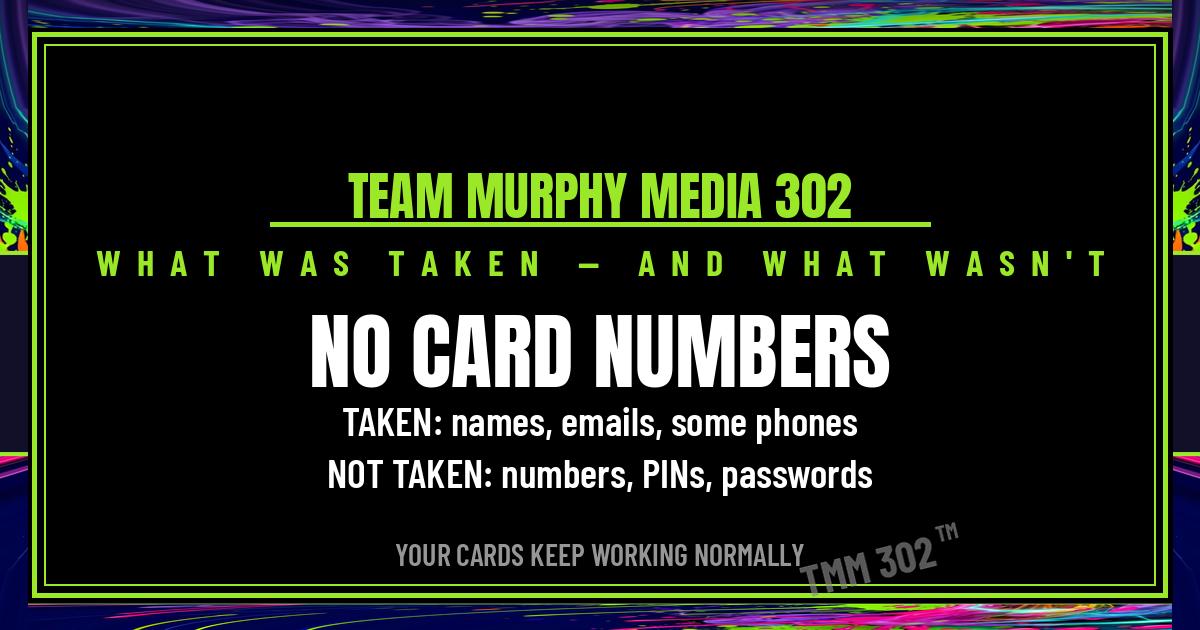
This is the part to hold onto. According to all three companies: no payment card numbers. No CVV codes. No expiration dates. No passwords. No PINs. No company has reported Social Security numbers taken. Your cards keep working normally. And all three companies say this leak has nothing to do with the service outages customers saw earlier in the week — a separate problem.
One honest caution, from the security firm Sophos: this crew does real damage, but some of its big-brand claims deserve a careful read — in cases like this, the data keeps tracing back to marketing, loyalty and concierge vendors, not the banks' own vaults. Which is exactly what the companies are saying happened here.
SO WHY THE SCAM ALERT? BECAUSE OF WHAT HAPPENS NEXT.
Stolen names and email addresses can't drain your account by themselves. What they can do is make a lie sound true. In the coming weeks, expect texts and emails that use your real name, claim to come from your real bank, and warn that your account has been compromised — because the scammers now know exactly who banks where. The message will want you to tap a link and "verify" your account. That tap is the whole robbery.
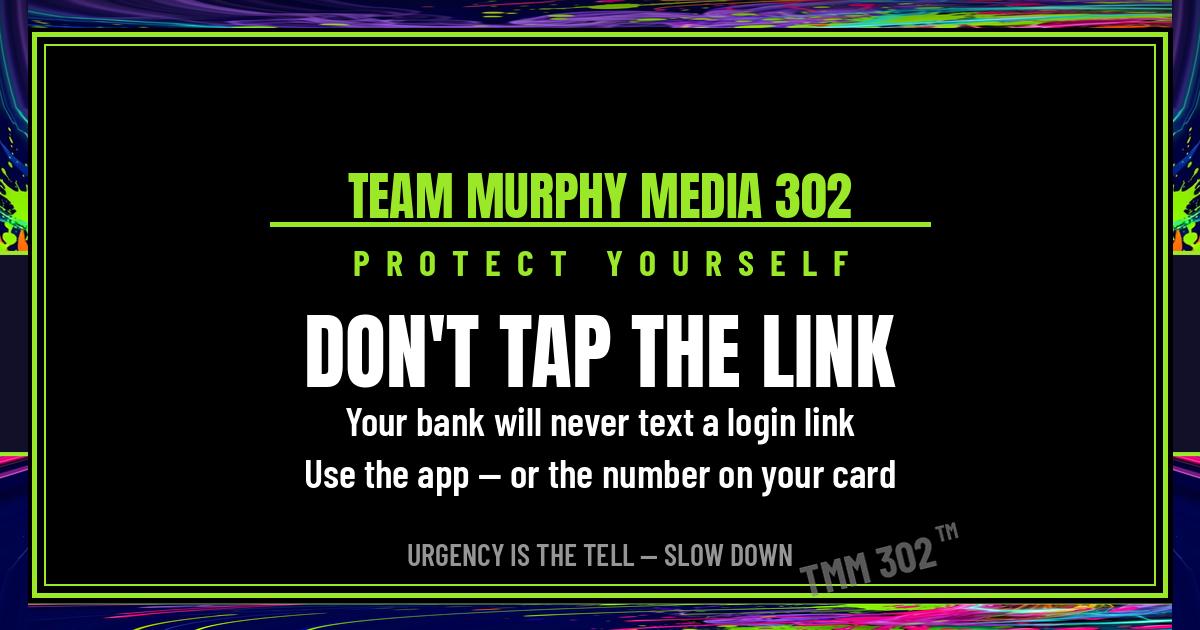
Protect yourself:
— Your bank will never ask you to click a link in a text or email and log in. Not ever.
— If a message says there's a problem, don't use its link or its phone number. Open your bank's app yourself, or call the number printed on the back of your card.
— Treat urgency as the tell. "Act now or your account is closed" is a script, not a bank.
— If you're a Chase customer in the affected group, the bank says it will contact you directly — a message demanding you act first is not that contact.
Sources: statements from JPMorgan Chase, Visa and Mastercard; Reuters' review of the leaked files; the Wall Street Journal; Cybersecurity Dive.
Photos: JPMorgan Chase headquarters, 270 Park Avenue, New York — Ajay Suresh, CC BY 4.0, via Wikimedia Commons. Visa Market Support Center, San Francisco — Coolcaesar, CC BY 4.0, via Wikimedia Commons. Mastercard prepaid card — Filippos Fragkogiannis, CC BY-SA 4.0, via Wikimedia Commons.