It weighs almost nothing, and you could lose it in your pocket. A “switch” is a small piece of metal or plastic — cheap to buy, cheap to print, about the size of a coin — and fitted onto the back of a Glock handgun, it changes what the gun is. A pistol that fires once each time the trigger is pulled becomes a pistol that doesn’t stop firing until the magazine is empty: up to 1,200 rounds a minute, according to the lawsuit Delaware filed on Thursday.
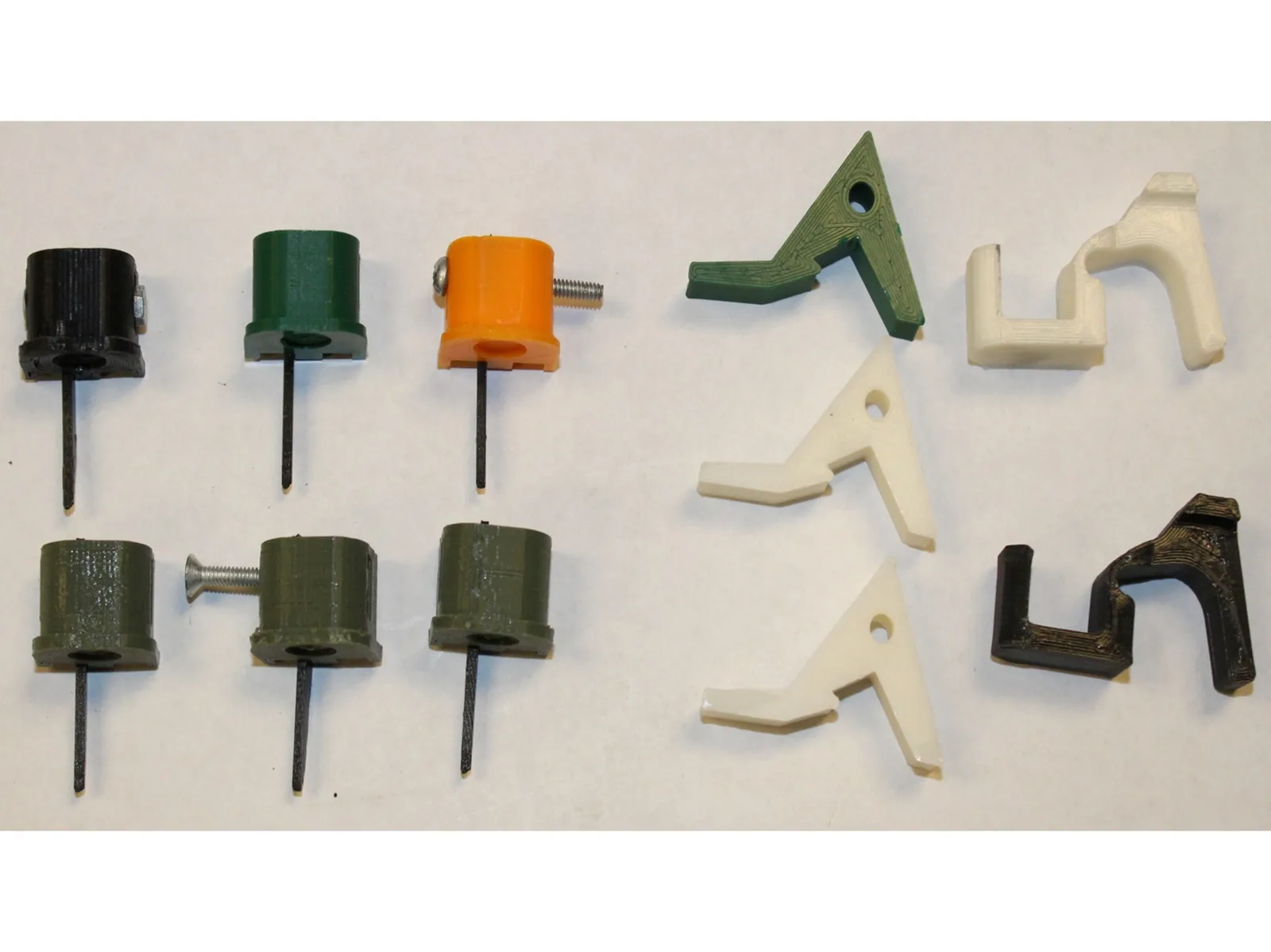
On Thursday, Attorney General Kathy Jennings announced that Delaware has sued Glock, Inc. and its Austrian parent company, Glock Ges.m.b.H., in the Delaware Court of Chancery. The suit is brought under the Keshall “KeKe” Anderson Safe Firearm Sales Act, and its argument is a simple one to follow: the state says Glock has known for decades that its pistol design can be converted to fully automatic fire easily, quickly, and cheaply — and kept designing, marketing, and selling the guns to civilians anyway.
The law itself carries a name worth knowing. Keshall “KeKe” Anderson was a 19-year-old mother and an innocent bystander, killed in a 2016 Wilmington drive-by shooting with a gun that had been bought through a straw purchase. Her family sued the store that sold it and lost — the court ruled the store was shielded by a state law that gave the firearms industry special immunity. Delaware answered in 2022 with Senate Bill 302, named for her, repealing that immunity — the first state in the country to do it — and opening the door for dealers and manufacturers to be sued over the harm their products do. On Thursday, the Attorney General walked the biggest handgun maker in America through that door.
The complaint, as the Attorney General’s office lays it out, alleges a dramatic rise in crimes involving switch-modified Glocks, in Delaware and across the country; multiple seizures of illegally converted Glocks here in Delaware; warnings from federal authorities that Glock ignored; a redesign that Glock declined to make; and marketing and social media content from Glock itself that, the state says, glorified fully automatic fire — a kind of fire no civilian can legally buy. The state brings five causes of action, including violations of the firearm industry accountability law and common-law public nuisance. It is asking the court to bar Glock from distributing easily convertible pistols to civilians in Delaware, order the nuisance abated, and award restitution and damages. Sales to law enforcement would not be affected. The switches themselves are already illegal — federal law treats them as machine guns, worth up to ten years for possessing one, and Delaware has banned them since 2022. This lawsuit is not about the little piece of plastic. It is about the gun it fits.
“Glock knew. They could have acted. They chose profit over people,” Jennings said in announcing the suit. “Our communities, and communities across America, are being terrorized by weapons with destructive power never intended or legal for civilian use.”
Glock has not said a word about the Delaware suit — no statement, and no court filing yet. But this is not the first courtroom where the company has had to answer this argument, and its defense is already on the record in its own words.
Start with the switch itself: Glock has never made one. In a federal case against the smuggling websites that sold the devices, the Justice Department itself stated it flatly — “Glock, Inc. has never manufactured switches.” The devices are counterfeits, mostly made in China and stamped with Glock’s trademark without Glock’s involvement; customs officers seized 1,507 of them in 473 shipments through Chicago alone in 2024, and other suppliers print them at home — more than 600 in a single West Virginia case. The National Shooting Sports Foundation, the industry’s trade group, puts it this way: the devices “aren’t produced by GLOCK,” they are “largely illegally imported from China,” and “GLOCK has actively cooperated with law enforcement.”
Then there is the gun. In a federal complaint Glock itself filed in Connecticut this fall, the company tells its own history: the pistol was developed in 1980–82 as a semiautomatic sidearm for the Austrian army. The switch, Glock says, was designed decades later by an unrelated man in Venezuela, disclosed in 1996 and patented in 1998, and it only became a street problem around 2020, riding in on Chinese imports and home printers. A design cannot have been built for a device that didn’t exist when the design was drawn — that is the heart of Glock’s answer, and the Attorney General’s timeline problem: the state says Glock “knew for decades,” pointing at that same 1996 patent, while Glock’s redesign investigation, by its own account, began in 2022.
Glock’s side has offered a reason for not rushing to change it: in March 2024, after the White House pressed for a redesign, industry spokesman Mark Oliva said he’d spoken with Glock and the company worried that changing a reliable design could make it less reliable; Glock’s own Connecticut filing later described the redesign work as finding a fix “without adversely affecting the safety, reliability and durability” of the pistol.
On the law, Glock’s Chicago filing calls suits like this “the classic definition of a qualified civil liability action prohibited by the PLCAA” — the 2005 federal law shielding gun makers from liability for criminals’ misuse of their products. Glock got powerful help in June 2025, when the U.S. Supreme Court unanimously threw out Mexico’s lawsuit against American gun manufacturers. But honesty cuts the other way, too: a federal judge denied Glock’s motion to dismiss the Chicago case in September 2025, the fifth time a court has let a switch suit past Glock’s shield argument, and Delaware’s law was built differently from the statutes Glock has beaten before — written specifically for firearms, with an express clause saying a maker’s responsibility is not cut off by the criminal acts in between. It has never been tested against Glock. It was, in a real sense, written for this fight.
And Glock’s final answer may be that part of what Delaware is suing for has already happened. The company says its engineers developed a “triple block” redesign that defeated every conversion device tested against it, in an ATF report dated July 8, 2025 — and that since December 1, 2025, it has stopped selling the older, convertible designs to civilians entirely. Whether that redesign is a genuine fix or a concession extracted by lawsuits is exactly what the two sides will fight about; the Attorney General’s office will note, correctly, that the fix arrived only after the lawsuits did, some twenty-six years after the switch was patented.
Underneath the arguments sit the numbers, and the numbers argue with each other. The state’s strongest figure is real: federal recoveries of conversion devices went from 658 in 2019 to 5,816 in 2023 — a rise of 784 percent. But recoveries are not crimes: the ATF itself warns that its trace data “do not constitute a random sample” and are not representative, and the agency has acknowledged that part of the jump reflects its own campaign teaching police departments to recognize and report the devices. In Delaware, the counts are small enough to hold in one hand — nine conversion devices traced in 2024, three in 2025, with no data showing all of them were even on Glocks. The most concrete Delaware case in the record came in April 2026, when federal prosecutors indicted a Wilmington man found with an illegally converted Glock 19.
And then there is the trend line nobody at Thursday’s announcement mentioned. While device recoveries were peaking, murder in America fell — about 12 percent in 2023, 15 percent in 2024, 18 percent in 2025. Jennings herself announced in January 2024 that Delaware’s violent crime rate had hit its lowest level ever recorded, down 40 percent since 2008. Wilmington complicates the victory lap in both directions: the city’s homicides fell to 12, then climbed back to 25 and 23 in the last two years counted. The honest summary is that switches flooded in during years when killing, overall, was going down — which proves neither side’s case, and which both sides will have to live with.
One piece of local color, because the name will fool people all weekend: Glock’s American headquarters is in Smyrna — Smyrna, Georgia. Not ours.
What happens now is the slow part. Glock will answer the complaint, most likely leading with the federal shield and the argument that it has already stopped selling the design Delaware wants banned. A Chancery judge will decide whether Delaware’s homegrown law can hold the door open. Cases like this are measured in seasons, not news cycles.
But whatever the court eventually decides, the case will travel under the name of the law it was filed with — and that name belonged to a woman who was never holding a gun at all. KeKe Anderson was standing nearby when somebody else’s shooting started. Delaware put her name on the law so the state would have to say it out loud every time the law gets used. On Thursday, the state used it — and for the first time, it used it on Glock.
Brought to you by Team Murphy Media
If you’d like us to continue this work and keep Shop Talk Weekly subscriptions free, consider making a donation: Cash App $dj7309 · PayPal paypal.me/dj7309. Can’t donate? Like, share & subscribe — that costs nothing and means everything.